Consumer advice · Practical next steps
Debt collector calling about a bill you already paid? Match the records first
Verify the collector, identify the debt, and connect your payment proof to the account being collected.
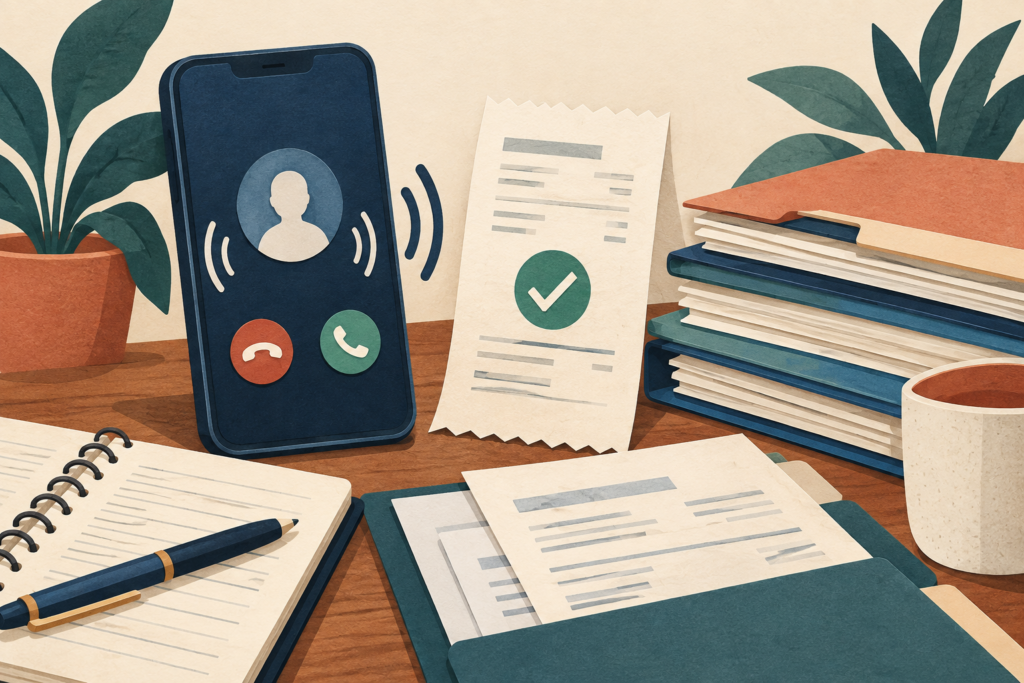
How do I respond to collection of a debt I already paid?
Verify who is contacting you and request the debt details. Compare the creditor, account, amount, and dates with your payment records. Dispute the specific error through a verified channel and keep copies. Read any validation notice promptly because deadlines can affect your rights.
Key takeaways
Verify the collector before sharing information.
Match payment proof to the correct account.
Read the validation notice and act promptly.
Do not ignore court papers.
Make sure you are discussing the same debt
Ask for the collector’s name, contact information, creditor, account details, and claimed amount. Independently verify the contact channel before sending financial records. A familiar company name is not enough to establish that a caller is legitimate. The CFPB explains that collectors generally must provide validation information in the initial communication or shortly afterward. Read that information rather than relying only on a phone conversation.
Trace where the payment went
Find the payment date, amount, reference, recipient, and bank confirmation. Determine whether it paid the full account, a particular invoice, or an agreed settlement. If you paid the original creditor, ask it to confirm how the payment was applied and whether the account was referred to collection. If you settled, save the settlement terms and proof that you met them. A withdrawal from your bank proves money moved, but you may still need to show which account it satisfied.
Send a focused dispute and keep monitoring
State that you dispute the amount because it was paid and explain the attached evidence. Follow the validation notice’s instructions and deadlines; certain protections depend on timely action. Ask for a written response and correction of any affected reporting. Keep a call log and copies of letters. If the problem continues, consider a CFPB complaint. A dispute with a collector does not replace responding to a lawsuit—court papers have their own deadlines.
Match the issue to the evidence
| Issue or record | What to check |
|---|---|
| Paid in full | Receipt and account confirmation |
| Settled for less | Written settlement and payment proof |
| Payment misapplied | Transaction reference and correct account |
Common questions
Should I pay again to stop the calls?
First verify the debt and compare the records. Paying again without understanding the claim may create another problem.
Can I ignore a summons because I paid?
No. Respond according to the court’s instructions and deadlines and seek legal help if needed.
Sources and article information
Official guidance checked October 6, 2026. Consult the linked sources for current instructions.
Prepared with AI assistance. General information, not legal advice. Examples and illustrations are explanatory; we do not submit complaints or guarantee outcomes.
Turn your records into a clear complaint
- Organize the relevant evidence.
- State the correction you want.
- Choose the right complaint route.
Free guidance, one step at a time.